
Retail traders are panic-buying the U.S. Dollar and shorting the Yen based on weekend headlines regarding the Strait of Hormuz. They are acting as the exact exit liquidity tier-one banks require ahead of the July 14 U.S. CPI report and Fed Chair Kevin Warsh’s debut testimony. The brutal truth is that lagging indicators cannot process geopolitical shocks or central bank divergence. To survive this volatility, you must stop guessing and start mapping institutional order blocks. While the masses get trapped in engineered liquidity sweeps, professional traders use the 3-Confirmation Entry Trigger to execute with mechanical precision.
The Catalyst: Weekend U.S. airstrikes on Iranian facilities and threats to the Strait of Hormuz drove WTI crude up 4%, triggering massive safe-haven flows into the U.S. Dollar.
The Trap: Retail traders are blindly chasing the USD/JPY surge to 162.0960 and shorting GBP/USD at 1.3370, becoming the counter-party liquidity for institutional algorithms ahead of the July 14 CPI.
The Execution: Do not trade the initial news spike. Map the multi-timeframe market structure, wait for the liquidity sweep, and execute using The Legacy Method™ to survive the macroeconomic noise.
❓ Why Geopolitical Shocks Create the Perfect Liquidity Sweeps
To understand how to trade this environment, you must analyse the mechanics of algorithmic price delivery during macroeconomic collisions. The upcoming week is a minefield of high-impact events, headlined by the July 14 U.S. CPI report and the debut congressional testimony of new Fed Chair Kevin Warsh.
This hawkish setup is currently colliding with a cooling labour market, evidenced by the recent disappointing Nonfarm Payrolls print of only +57k in June. This divergence creates a highly volatile, two-sided trap for retail traders. When high-impact news breaks, algorithms do not just move the price; they engineer volatility to hunt stops. This manipulation creates the institutional order blocks we map on the chart. A true order block is the specific footprint where central bank dealers accumulated their positions before displacing the price. By understanding how banks manipulate retail traders at support and resistance during these macro events, you stop being the liquidity and start trading alongside the institutions.
🎯 Execution: Mapping Institutional Order Blocks Across Major Pairs
Navigating a highly divergent central bank environment requires mechanical execution, not emotional reaction. Here is your step-by-step protocol to trade the volatility across the major pairs without blowing your account.
1. USD/JPY and the 162.00 Intervention Trap
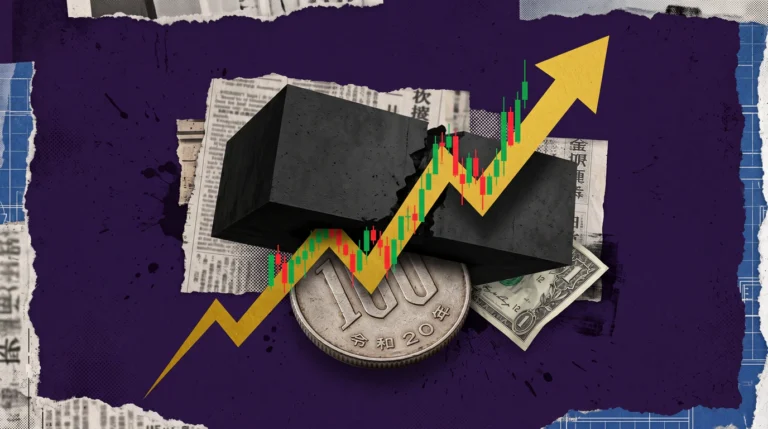
USD/JPY has surged to 162.0960, up 1.12%, lingering near multi-decade highs and sparking intense Bank of Japan (BoJ) intervention speculation alongside GPIF allocation rumours. Retail traders are blindly buying the breakout, assuming the bullish trend will easily absorb the resistance.
- Action: What is a liquidity sweep in forex trading? It is the rapid piercing of a key level, followed by an immediate rejection. If the BoJ intervenes, algorithms will engineer a massive buy-side liquidity sweep above 162.00 to trap retail breakout traders. Do not buy the breakout. Wait for the sweep, drop to the 5-minute chart, and look for a Market Structure Shift (MSS) to short the pair back into the discount institutional order blocks.
2. GBP/USD Fading the Geopolitical Gap
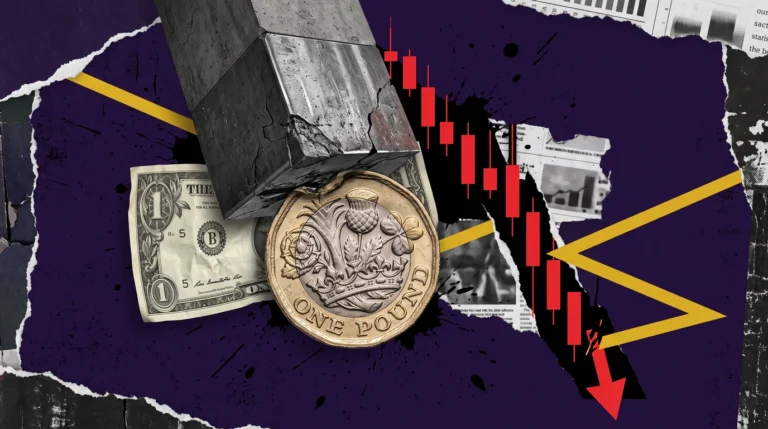
GBP/USD gapped lower toward 1.3370 due to renewed risk premiums and safe-haven flows into the dollar, struggling below the 1.3400 handle.
- Action: Retail traders are panic-selling this gap, assuming a continuous downtrend. Instead, map this drop as a potential “liquidity void”. Wait for a retracement into the discount institutional order blocks created during the initial displacement leg. Apply the 3-Confirmation Entry Trigger taught in the EDGE Module to place your limit order, ensuring your stop loss is protected behind the structural swing low.
3. AUD/USD and the Commodity Compression
AUD/USD has lost its recent recovery momentum, trading at 0.6940 (-1.45%), as traders await the July 14 China Trade Balance data amidst global uncertainty.
- Action: The 4% surge in WTI crude oil is directly pressuring energy-sensitive currencies. Do not attempt to catch the falling knife on the AUD. Wait for the China export/import data to trigger a liquidity sweep on the 1-hour chart, confirming the true institutional direction before committing capital.
⛔ What If It Fails: Navigating Prop Firm Drawdowns During News
The most dangerous assumption in trading is believing that you can trade high-impact news without strict rules. If your analysis is invalidated, you must accept the loss mechanically.
If you are trading a funded account via FundedNext or Fundingpips, you must strictly adhere to their news trading restrictions. Many prop firms prohibit opening new positions two minutes before and after high-impact releases like the July 14 U.S. CPI or Fed Chair Kevin Warsh’s testimony. Violating these rules will result in an immediate breach of your consistency rules or drawdown limits.
Furthermore, ensure your capital logistics are flawless. If you are trading on Exness, ensure your account is pre-funded. The standard withdrawal and deposit pipeline, moving funds from Exness to your Binance Wallet, and then executing via P2P or direct withdrawal to local banks (Meezan, UBL, HBL) or mobile wallets (JazzCash/Easypaisa), must be managed outside of market killzones. Do not let deposit delays ruin your execution timing during critical macroeconomic windows.
💡 Expert Insight: Algorithmic Time Macros and the CPI Release
Here is a pro tip that separates professional traders from the retail majority: algorithms do not just react to the data; they react to the time the data is released.
Institutional dealers operate on “algorithmic time macros.” The most violent liquidity sweeps rarely happen at the exact second the CPI data is published. Instead, the algorithms often engineer a fake move at the release, wait for retail to commit, and then execute the true directional move 15 to 30 minutes later, often aligning with the top of the hour or the opening of the New York killzone.
If you see a massive spike in USD/JPY or GBP/USD exactly at the minute of the CPI release, do not chase it. That is the inducement. Wait for the macro time window to complete, let the retail traders get trapped, and then look for your institutional order blocks to form on the 5-minute chart.
FAQ
What are institutional order blocks?
Institutional order blocks are specific price zones where tier-one banks accumulate massive positions. They represent the last contrary candle before a strong impulsive move that breaks market structure, serving as a high-probability entry zone.
How does the July 14 U.S. CPI affect Forex markets?
The CPI data dictates the Federal Reserve’s rate path. A hot print will trigger algorithmic buying of the USD, while a cool print will cause a rapid repricing. Algorithms will hunt retail stop-losses in both directions before establishing the true trend.
Will the Bank of Japan intervene at 162.09?
USD/JPY is lingering at multi-decade highs. If the price pushes significantly higher, the probability of Ministry of Finance intervention increases, which would trigger a massive buy-side liquidity sweep and a violent reversal.
How do I avoid liquidity sweeps during central bank announcements?
You avoid liquidity sweeps by waiting for the fakeout. Instead of entering on the initial news breakout, wait for the sweep, confirm a market structure shift on a lower timeframe, and enter on the retracement into an institutional order block.
Stop guessing where the market will go during central bank divergence and geopolitical shocks. The Legacy Sprint™ is a 40-day virtual cohort designed to install The Legacy Method™ into your daily routine. You will master the perfect the 3-Confirmation Entry Trigger, and implement The Tri-Document System to trade with institutional rigour.
Want to start mapping structure immediately?
Download the SMC Guide Sheets to get the exact visual frameworks for identifying institutional order blocks and liquidity sweeps on your charts today.
⚠️ Trading involves significant risk of loss. Past performance is not indicative of future results. This content is for educational purposes only and does not constitute financial advice.